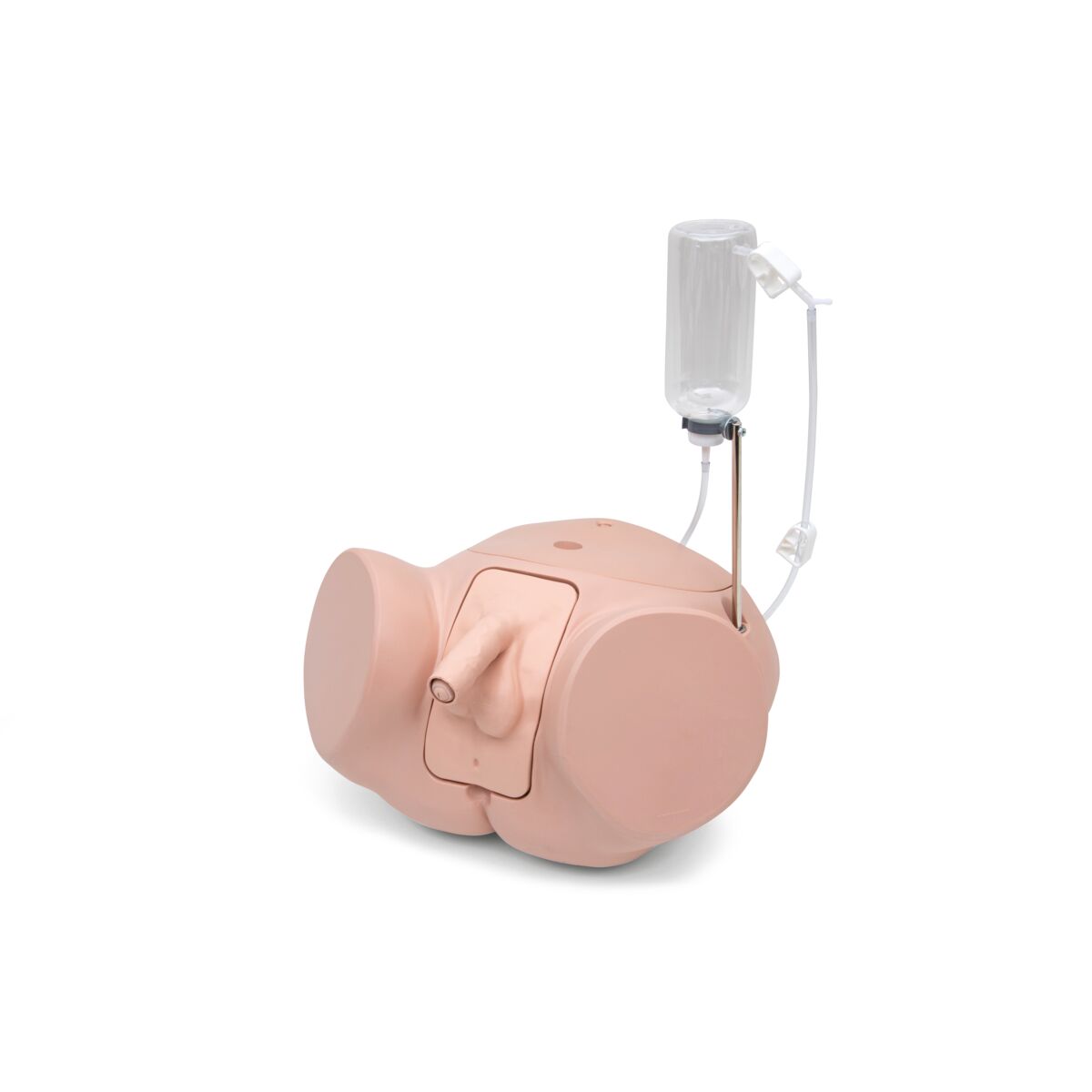
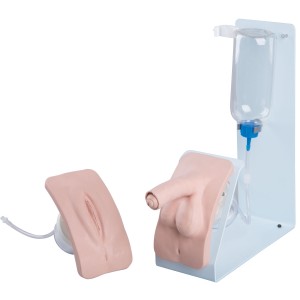
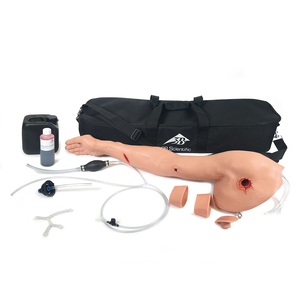
The P93 PRO male catheterization trainer can be used for realistic demonstration, practice, and evaluation of male bladder catheterization, either through the urethra (transurethral) or through the abdominal wall (suprapubic). The non-organ insert can be attached to the holder using magnetic connectors. The insert is made of soft and flexible material. Students can practice all the necessary catheterization techniques (e.g., disinfection) on it. The material feels realistic to the touch, and resistance is felt when inserting and removing the catheter, and the depth of insertion is also realistic.
Training:
When the catheter is correctly positioned, fluid flows out, just as it does in real patients. In addition, the position of the catheter can be checked at any time using the transparent bladder. The abdominal wall of the PRO version can be removed, allowing for a more vivid demonstration of the urethral catheterization procedure.
Replacement and care of a suprapubic urinary catheter:
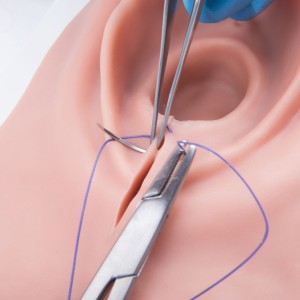
If catheterization through the urethra is no longer possible, a suprapubic catheter must be inserted. The suprapubic catheter is usually inserted into the bladder by the doctor through the abdominal wall and secured to the abdominal wall. The PRO version can be used to practice suprapubic catheterization and care. Care includes changing dressings, cleaning the catheter, and disinfecting the wound.
Advantages of the AP93 PRO catheterization simulator:
Catheterization with realistic resistance
3 levels of urethral stricture
Soft skin on the genitals (e.g. for practicing disinfection)
Anatomically realistic pelvic structure
Fluid discharge upon successful catheterization
Monitoring possible with transparent bladder and abdominal cover
Subrabubicus catheter for practicing cleaning and care
Secure fixation thanks to non-slip feet
Quick assembly/disassembly thanks to magnetic connections
Easy cleaning and maintenance, can be completely dismantled
The sponge inside prevents moisture from accumulating
Accessories:
Realistic lower body
Catheterization pad with transparent bladder
Glass and tube connections
Carrying bag
Note:
For catheterization, we recommend using a catheter with one opening or two openings opposite each other. Both silicone and PVC catheters can be used. We recommend using the following catheters: